Must‑See Paintings at the Van Gogh Museum – Sunflowers and Beyond
Discover the 15 essential paintings to see at the Van Gogh Museum in Amsterdam, with simple looking tips for each masterpiece.
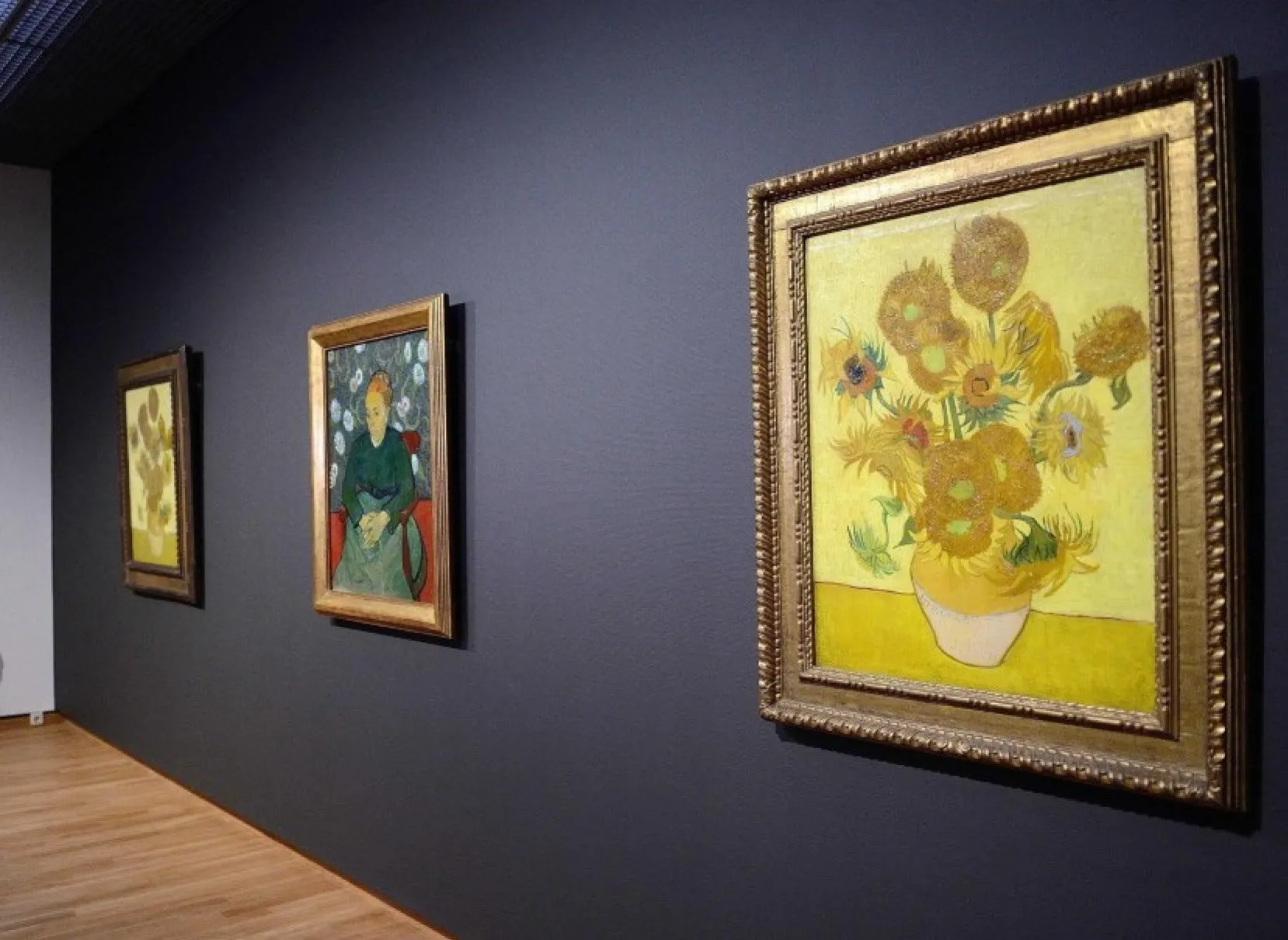
The Van Gogh Museum can feel overwhelming: hundreds of works, one short visit. Instead of trying to see everything, anchor your time around a set of must‑see paintings — and learn how to really look at them.
How to use this list
Treat these 15 works as checkpoints. You don't need to rush between them; instead, use them to slow down.
For each painting, try this simple 3‑step ritual:
- Stand back and take in composition.
- Move closer for brushwork and texture.
- Read the label and context only at the end.
⏱️ Time tip:
Give at least 2–3 minutes to each key canvas. That's already 30–45 minutes of focused looking — more than most visitors manage.
1. The Potato Eaters (1885)
- Period: Early Dutch years
- Mood: Dark, earthy, almost smoky
- Look for: Hands and faces – rough but tender.
Ask yourself:
- How does the dim oil lamp change the atmosphere?
- Are these people being judged, or respected?
2. Sunflowers (1889)
Arguably the museum's most famous painting.
- Stand at mid‑distance and notice:
- The oval rhythm of flowers and vase.
- How yellows are not all the same; some almost green, some orange.
- Then come close and inspect:
- Cracks in thick paint (impasto).
- Petals that almost cast shadows.
📸 Photography tip:
Instead of fighting for front‑row selfies, take a photo from the side or back of the crowd with people in silhouette. It often looks better and feels calmer.
3. Self‑Portraits
There are several, and they act like a time‑lapse of Vincent's psychology.
Make a mini game:
- Start with an early self‑portrait and end with a later one.
- Compare:
- Background colours
- Eye direction
- Brushstroke energy
Ask: If this were a friend's selfie, what mood would you read?
4. The Yellow House (1888)
Here you see the dream of community and art in Arles.
- Trace with your eyes where Vincent wanted Gauguin to live.
- Notice how architecture becomes almost cartoon‑simple, yet the colour carries emotion.
5. Wheatfield under Thunderclouds (1890)
This late landscape is almost abstract.
- Cover the sky with your hand (mentally) and look only at the field.
- Then do the opposite: keep only the sky in mind.
It's like two paintings welded together — earth vs sky, weight vs pressure.
6. Almond Blossom (1890)
- Painted for the birth of his nephew.
- Trace the Japanese influence: cropped branches, flat sky, strong outlines.
🌸 Mindful moment:
Take one quiet minute here. Close your eyes, breathe, and reopen them — let this be the reset button of your visit.
7. Bedroom in Arles
Look at nothing but lines for 30 seconds:
- Tilted bed
- Leaning pictures
- Slightly off‑kilter floor
The room feels safe yet unstable — like a mind trying to rest.
8–15. Other works to catch if you can
- Paul Gauguin's Chair – tension between two artists in furniture form.
- The Sower – repeated motif of planting and hope.
- Orchards in blossom – colour experiments after winter darkness.
- Beach scenes with boats – note sand, ropes, and sky textures.
- Studies of peasants and workers – backbone of his empathy.
- Still lifes with books or shoes – self‑portraits in objects.
- Drawings and letters – his mind on paper, not just canvas.
- Japanese prints – the art that rewired his sense of space.
Simple “looking tools” you can reuse
Steal these prompts for any painting in the museum:
- Where is the quietest area of the canvas?
- If this were a movie frame, what just happened?
- What would this look like in black and white?
- Where would you hang this in your home and why (if at all)?
Write quick notes in your phone or sketchbook. At the end, you'll leave not just with photos, but with a personal conversation you've had with the paintings.
Om författaren

Art Historian
Den här guiden är skriven för att göra din museidag tydlig, lugn och meningsfull – med praktiska råd och en mild uppmaning att söka upp de verk som kan bli gamla vänner.
Tags
Comments (0)
Loading comments...